Wednesday, October 21, opens with unsettled to active conditions on the bands. In its 3-day forecast issued at 0030 UTC on October 21, NOAA's Space Weather Prediction Center said the greatest observed 3-hour Kp over the past 24 hours was 3, below storm levels, but the greatest expected Kp for October 21 through 23 is 4.67, which is G1 on the NOAA scale. Forecasters said G1 minor geomagnetic storming is likely on October 21 due to coronal hole high speed stream effects, with the highest forecast values, 4.67, in the 00-03 and 06-09 UTC periods today. No radio blackouts were observed over the past 24 hours, and SWPC puts the chance of R1-R2 radio blackouts at 25 percent on October 21 and 22, falling to 20 percent on October 23, with a 5 percent chance of an S1 or greater solar radiation storm on each day.
Today is also a deadline day for operators following the federal RF exposure inquiries. ARRL is tracking two parallel proceedings opened on September 17 by the FCC and the U.S. Department of Health and Human Services. Comments on the HHS Request for Information are due today, October 21, with comments on the FCC issues due by October 22. Neither inquiry changes the current FCC RF exposure rules that apply to all radio amateurs, but ARRL notes they could lead to changes in later proceedings if the current rules are found deficient. The FCC proceeding focuses on issues remanded by the U.S. Court of Appeals in 2021, while the HHS inquiry seeks evidence more broadly on health effects of electromagnetic fields and RF radiation.
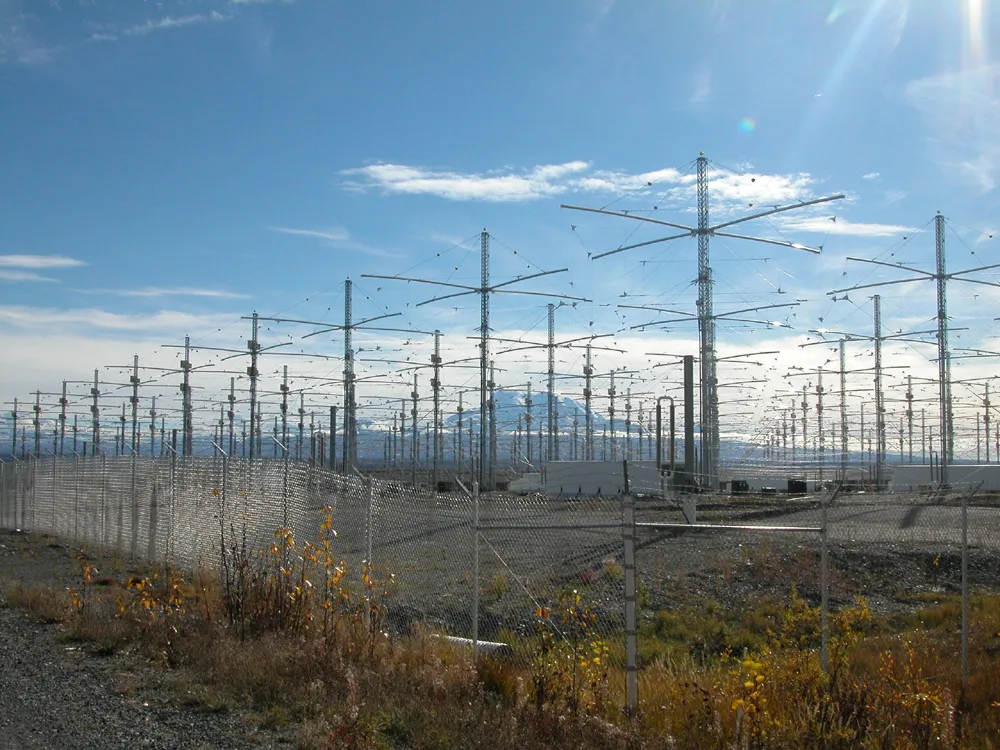
In Alaska, the High-frequency Active Auroral Research Program at Gakona is in the second day of its October 20-24 research campaign, with transmissions planned from 0530 to 0930 UTC each day between 2.8 and 10 MHz. The University of Alaska Fairbanks Geophysical Institute says the transmissions support the INFUSE-II and DUST-III sounding rocket missions launching from Poker Flat Research Range, north of Fairbanks. INFUSE-II will test a new type of ultraviolet imager for use on future space telescopes, while DUST-III will carry a miniature laboratory into space to study how tiny grains of space dust form and grow. Transmit times vary with ionospheric conditions, and HAARP welcomes reception reports online.
Schools and satellite listeners have a busy few days. The ARRL School Club Roundup runs through Friday, October 23, in its third day today, for school clubs on CW, phone, and digital modes. The 21st ARRL Online Auction, with more than 200 items, closes on October 22. Then on Thursday, ARISS begins its Expedition 75 Series 34 SSTV event, themed ARISS Hardware. According to ARISS, it begins October 22 at 15:30 UTC and concludes October 25 at 18:00 UTC, on 437.55 MHz, plus or minus Doppler, in Robot 36 mode, 36 seconds on and two minutes off.
For DXers, the ARRL DX Bulletin notes Kazu active as 3B9/M0CFW from Rodrigues Island from October 20 to 28 on the HF bands, and Ryan, AG4ZP, as 5W0ZP from Samoa from October 19 to 29, operating QRP on 40 through 10 meters primarily on FT8 and FT4, with possible CW. The S9R operation from Sao Tome, which began October 17, continues through October 31. All of that is a warm-up for the biggest weekend of the fall: the CQ World Wide DX Contest, SSB, runs from 0000 UTC Saturday, October 24 to 2359 UTC Sunday, October 25 on 160, 80, 40, 20, 15, and 10 meters, with an exchange of RS report plus CQ Zone. Logs are due by 2359 UTC on October 27.