On December 8, 1941, the day after the attack on Pearl Harbor, the Federal Communications Commission issued Order No. 87 and silenced amateur radio across the United States, its territories and its possessions. Transmitters that had filled the evening bands went dark overnight. The ARRL station W1AW stayed on briefly by special permission to spread the word to anyone who had missed the order, then it too went off the air on January 10, 1942, for the duration of the war.
Thousands of hams answered by enlisting, taking their Morse code and electronics skills into the armed services. But the ARRL argued that the operators who stayed home should not sit idle either. Their emergency experience, the League said, could help defend their own towns. The FCC listened, and in June 1942 it created something new: the War Emergency Radio Service, known everywhere simply as WERS.
WERS was not amateur radio under another name. Licenses went to communities, not to individuals, and local civil defense offices ran the networks. To operate, you generally had to hold an amateur license, and both men and women served under special WERS permits. The main band was the old two-and-a-half-meter band, 112 to 116 megahertz, with additional frequencies higher up. Power was limited to 25 watts, enough for about ten miles, because these were neighborhood networks meant for air raid protection and local emergencies.
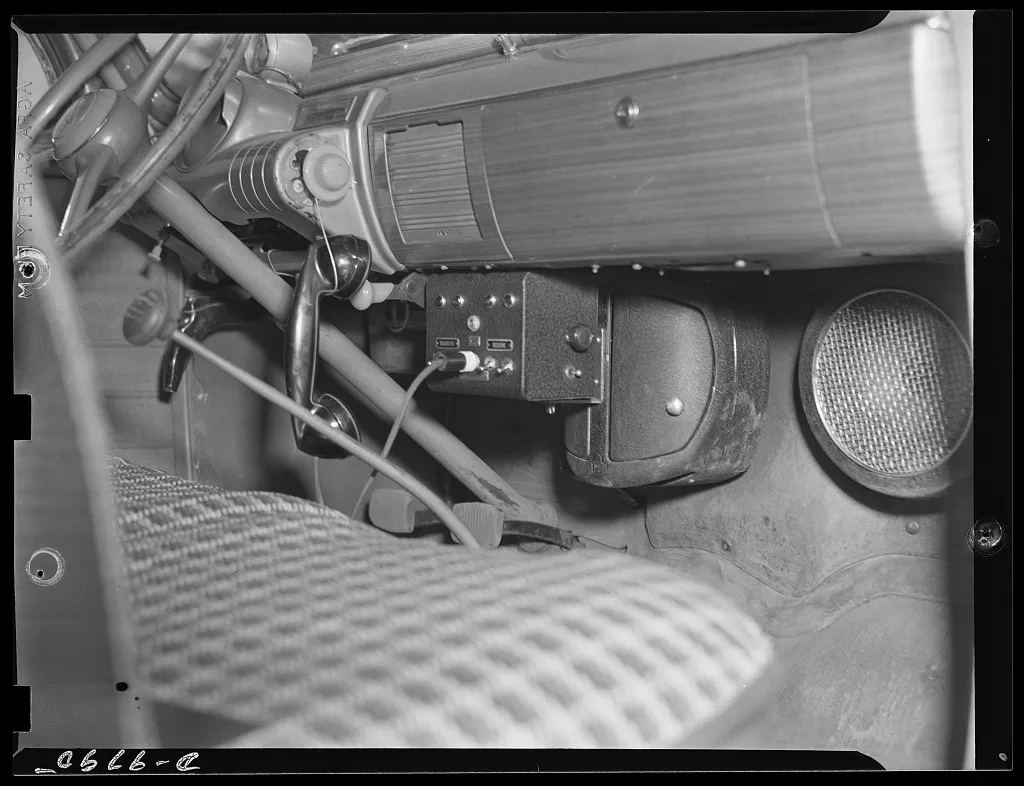
The equipment told the story of a country conserving everything for the front. The Office of Civilian Defense urged operators to build gear from salvaged parts taken from civilian receivers, rather than demand scarce new components. Hams converted commercial shortwave transmitters into mobile two-way sets, powered by a car battery, so a station could stay in touch with its control center even if telephone and power lines were down. In San Francisco, the city supplied 35 transceivers for its licensed WERS operation, and dozens of local amateurs staffed it.
The feared air raids never came to most American towns, but WERS operators were not just drilling. They provided communications during floods, hurricanes and winter storms, doing at home the same emergency work hams had always done in peacetime. By the end of 1944, about five thousand transmitters were operating under some 250 WERS licenses across the country.
When the war ended in 1945, WERS was retired that November and amateurs gradually got their bands back. But the idea did not retire with it. WERS was replaced by the Radio Amateur Civil Emergency Service, RACES, and its pattern of licensed amateurs organized in advance for their own communities lives on in emergency communications today. Silenced as amateurs, the hams of WERS had proved the point anyway: a trained local operator, ready before disaster strikes, is worth keeping on the air.