First, the housekeeping: no, "ham" is not an acronym. There is no hidden meaning in Hertz, Armstrong, Marconi — or Hammarlund, or any of the other clever backronyms that circulate at club meetings. The real story is better, because it starts with an insult.
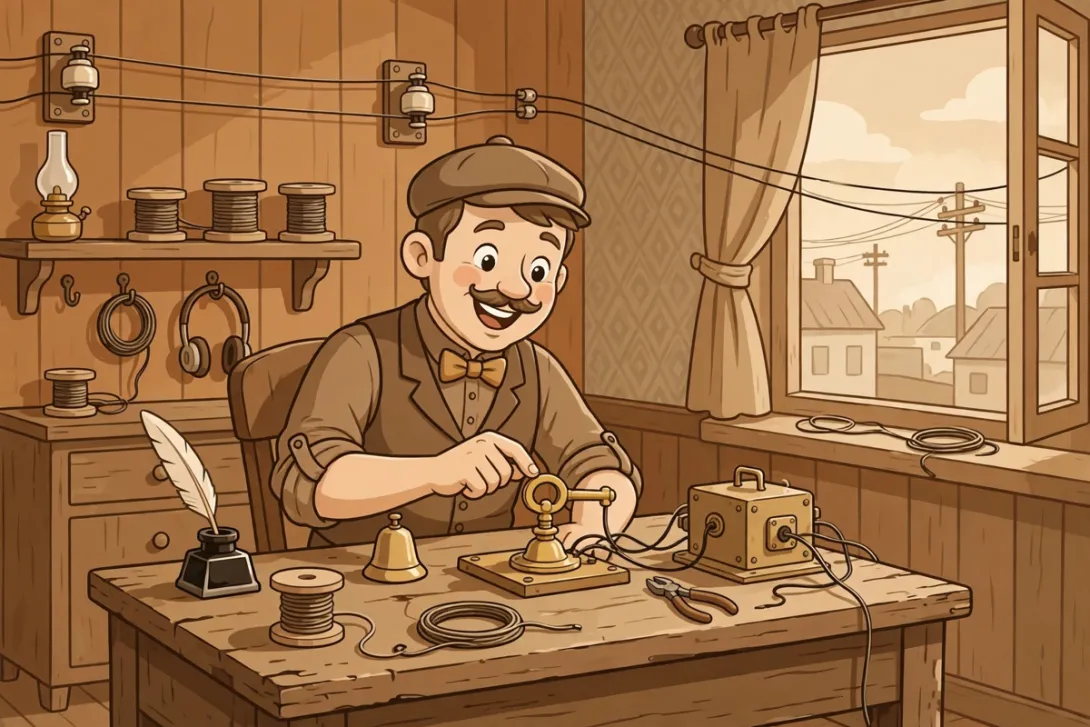
In the 19th century, professional landline telegraphers used "ham" — short for "ham-fisted" — to mock operators with sloppy Morse sending skills. Telegrapher unions and trade groups alleged that companies were hiring "ham" operators who were negligent or incompetent, and the disreputable telegraph schools that produced them were sneeringly called "ham factories." Being a ham meant being bad at the key.
When wireless arrived, the insult crossed over. Early commercial and military wireless operators used "ham" against interfering amateurs, whose spark stations could blanket the airwaves. The first documented amateur-radio use dates to 1909, when Robert A. Morton, writing in the April issue of Electrician and Mechanic, reported overhearing an amateur transmission that included the remark: "Say, do you know the fellow who is putting up a new station out your way? I think he is a ham." The term did not become widespread until around 1920, but the seed was planted.
What happened next is the best part. Rather than fight the label, amateurs adopted it. By the mid-20th century, "ham" had lost its sting entirely and become a badge of pride worn by millions of operators worldwide — a label the amateur community reclaimed, the way other communities have reclaimed slurs thrown at them. Today it says "ham radio" on the bumper stickers, the club banners, and the vanity plates.
The origin still fits, if you squint. Amateurs were — and are — the experimenters, the homebrewers, the ones willing to look a little rough around the edges while the professionals kept their uniforms pressed. The professionals called them hams to mean unskilled; the amateurs kept the name to mean fearless. A century later, the badge of honor won. We are all hams now.